About Intipucá
History, culture, and the two-coast story
History
A City With Deep Roots
Intipucá was founded in the colonial era and has grown into one of the most recognized municipalities in the department of La Unión, El Salvador. With a population of approximately 10,000 people (including its significant diaspora), Intipucá punches far above its weight on the national stage.
The city sits in the southeastern corner of El Salvador, near the shores of the Gulf of Fonseca, a body of water shared by El Salvador, Honduras, and Nicaragua. This coastal geography has shaped the town's economy, cuisine, and culture for centuries.
Intipucá is officially a municipality in the department of La Unión. Its name is believed to derive from the Nahuat language, spoken by indigenous peoples in the region before the Spanish conquest.
The Diaspora Story
The Diaspora Story
Since the 1960s, Intipuqueños have been making their way to the United States — particularly to the Washington D.C. metro area, Maryland, and Virginia. Today, the diaspora community sends millions of dollars in remittances each year, and many families maintain homes on both continents. The town's annual Fiestas Patronales draw thousands of returning diaspora members every year.
Geography & Climate
Geography & Climate
Location
La Unión department, southeastern El Salvador
Climate
Tropical. 28–35°C year-round. Dry season Nov–Apr.
Coast
Gulf of Fonseca — shared with Honduras & Nicaragua
Located in the southeastern corner of El Salvador, Intipucá sits near the coast of the Gulf of Fonseca, sharing maritime borders with Honduras and Nicaragua. The climate is tropical with a dry season (November–April) and a rainy season (May–October). Average temperatures hover between 28–35°C year-round.
Must See
Landmarks & Traditions
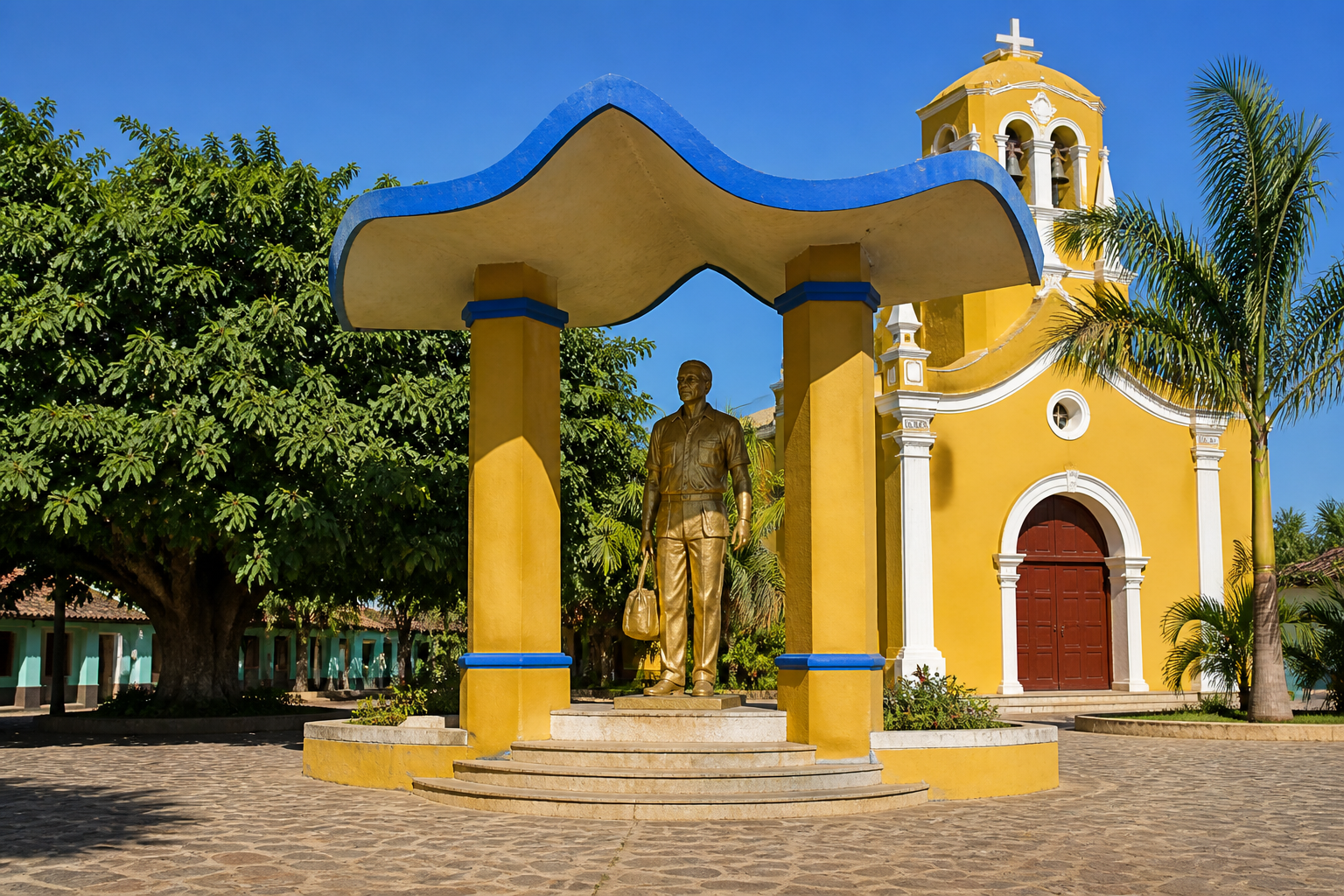
Monumento al Emigrante
The plaza statue that honors everyone who left — and everyone who still comes home.
Iglesia Parroquial de Intipucá
The parish church at the heart of the main plaza — yellow walls, red door, Sunday bells.
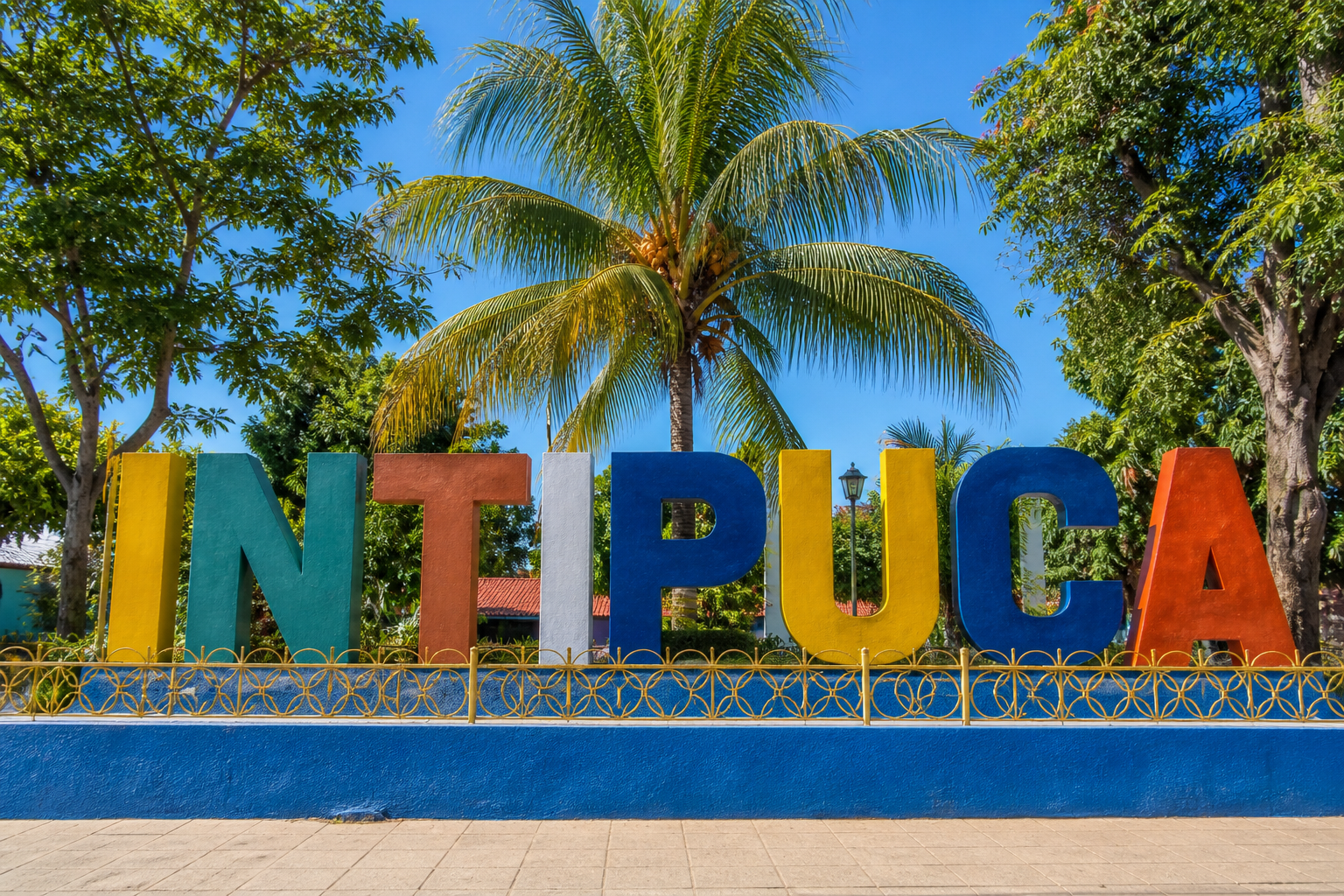
INTIPUCA town letters
The colorful block letters that greet you when you arrive — the photo every returning family takes.
Playa Las Tunas / El Esterón
Quiet volcanic black-sand beaches within reach of town — gulf water, palms, and long horizons.
Fiestas Patronales
Held every March — the biggest annual celebration and the diaspora’s homecoming week.
Calle Principal
Pharmacies, remittance offices, and the storefronts remittances keep open.
Newsletter
Don’t miss the next reunion
Fiestas, listings, and the road home — in English or Spanish, from La Unión to Maryland.